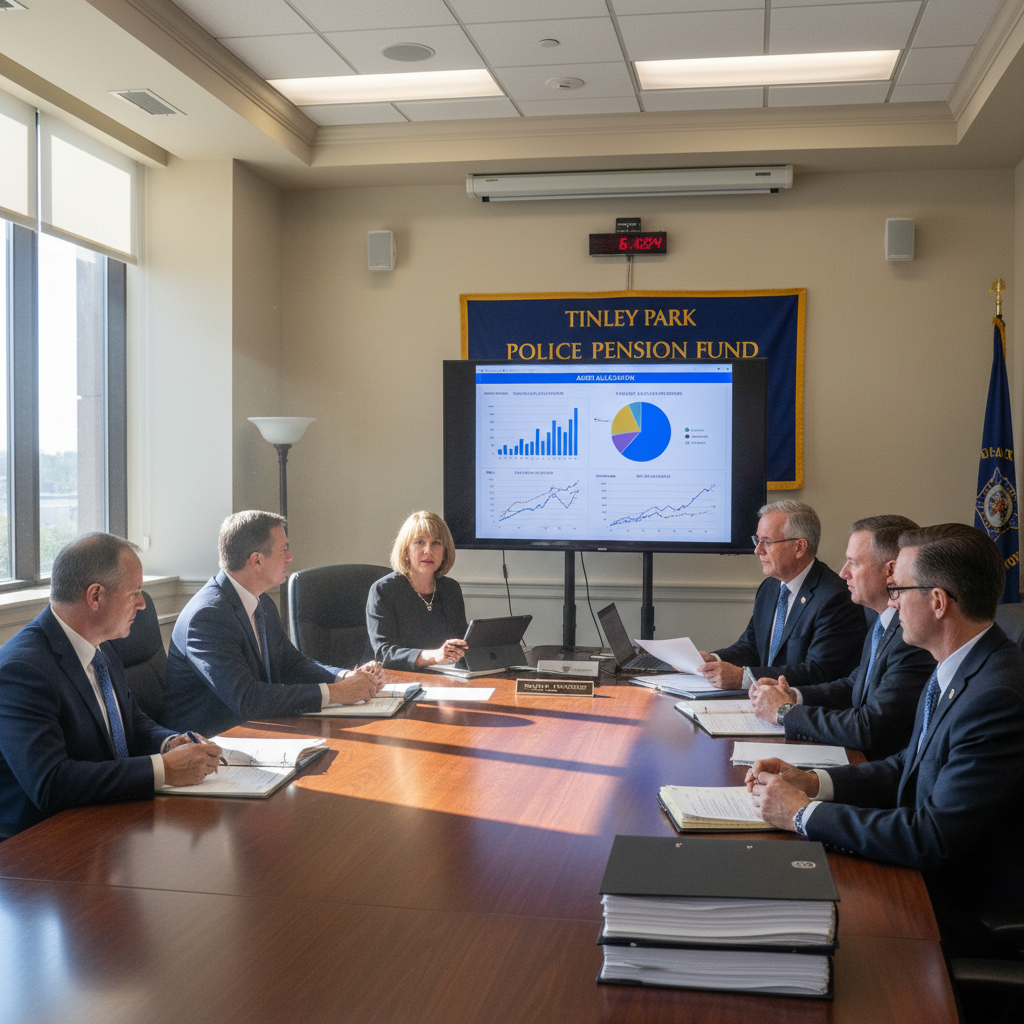
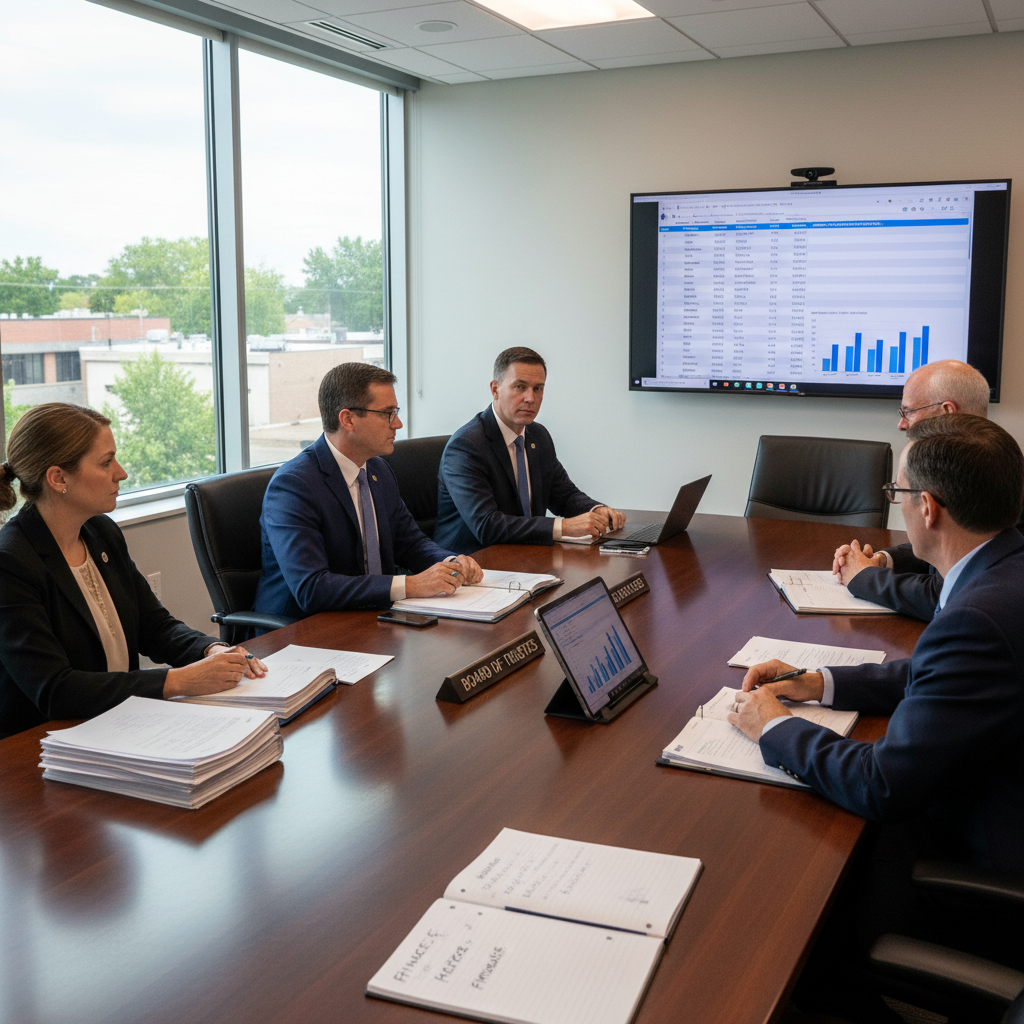
The Board of Trustees for the Tinley Park Police Pension Fund convened for its quarterly meeting on Monday, April 6, to address a detailed agenda covering the fund's financial health, administrative policies, and personnel changes. The meeting, held at the Tinley Park Police Department, underscores the board's critical role in managing retirement assets for the village’s sworn police officers.
Pension boards, while often operating behind the scenes, are a cornerstone of municipal governance, responsible for the fiscal stewardship of funds that provide retirement, disability, and survivor benefits to public safety officers and their families. The Tinley Park board's responsibilities are dictated by the Illinois Pension Code, which outlines strict regulations for how these funds are managed and invested.
The agenda for the April meeting included several key financial items. The board was scheduled to hear investment reports from Sawyer Falduto Asset Management, LLC, and Verus Advisory, Inc., which advises the Illinois Police Officers' Pension Investment Fund (IPOPIF). These reports are essential for the trustees to monitor investment performance and ensure the fund's strategy aligns with its long-term obligations.
Additionally, the board reviewed the monthly financial report from its accounting firm, Lauterbach & Amen, and approved the payment of bills. A central topic was the review and potential update of the fund's cash management policy, a crucial component of its overall financial strategy.
Board oversees fund administration
The Tinley Park Police Pension Board consists of five trustees who serve staggered two-year terms, creating a mix of perspectives from different stakeholders. The board includes two members elected from the ranks of active police officers, one member elected by retired beneficiaries, and two members appointed by the Village President. The current board members are Fred Mondt (President), Timothy Ehlers (Assistant Secretary), Jim Guth, Jonathan Garrity, and Brent Poortinga.
This structure is designed to ensure that the interests of active officers, retirees, and the public are all represented in the management of the pension fund. The Village Treasurer also serves as an ex-officio member and custodian of the fund's assets.
The April 6 agenda reflected the board's diverse administrative duties. One of the first items of new business was the certification of election results for an active member position on the board, a regular process that ensures continuous representation for current officers. Trustees also planned to discuss authorized agents for the statewide consolidated fund, IPOPIF, and approve the annual engagement letter with its accounting firm.
Membership and benefits discussed
A significant portion of every meeting is dedicated to personnel matters that directly impact officers and their families. The board was set to review an application for membership from Brian Brooks, a new officer joining the fund. Simultaneously, they processed withdrawals for two individuals, Doug Curlee and Troy White-Meyer, reflecting the natural turnover within the police department.
The agenda also listed 'Portability Updates' for four officers: Jack Goldsmith, Nicole Innocenti, Jarrett Tinman, and Jacob Vinci. Pension portability allows police officers to transfer their service credits between different Illinois municipal police pension funds if they move to a new department, a key feature for career mobility in law enforcement. Handling these transfers is a routine but complex administrative task for the board.
Furthermore, the board received a legal update from its attorneys at Puchalski Goodloe LLC, which included a status update on a disability case for Patrick Shea. These discussions, often held in closed session to protect individual privacy, are a vital part of the board's duty to administer benefits according to state law.
Ensuring long-term stability
The board's work is guided by detailed actuarial valuations, which are professional assessments of the fund's long-term financial health. The most recently available public report, an actuarial valuation as of May 1, 2024, provides a snapshot of the fund’s assets, liabilities, and funding status. These reports help determine the 'statutory minimum required contribution' that the Village of Tinley Park must make to the fund each year to ensure it remains on a path toward full funding. The village remains committed to transparency, posting annual reports on the police pension fund's condition on its website. In Florida, Sweetwater approves $4.6 billion Flagler Center on former mobile home park site.
The ongoing management by the pension board is part of a broader system of local governance, which also includes events designed to foster community, such as the recently announced Music in the Plaza lineup for the upcoming season. While pension management focuses on fiscal obligations, it is a critical function that allows the village to attract and retain qualified public safety officers.
The Tinley Park Police Pension Board will hold its next quarterly meeting on Monday, July 6, 2026, to continue its oversight of the fund's assets and administration.