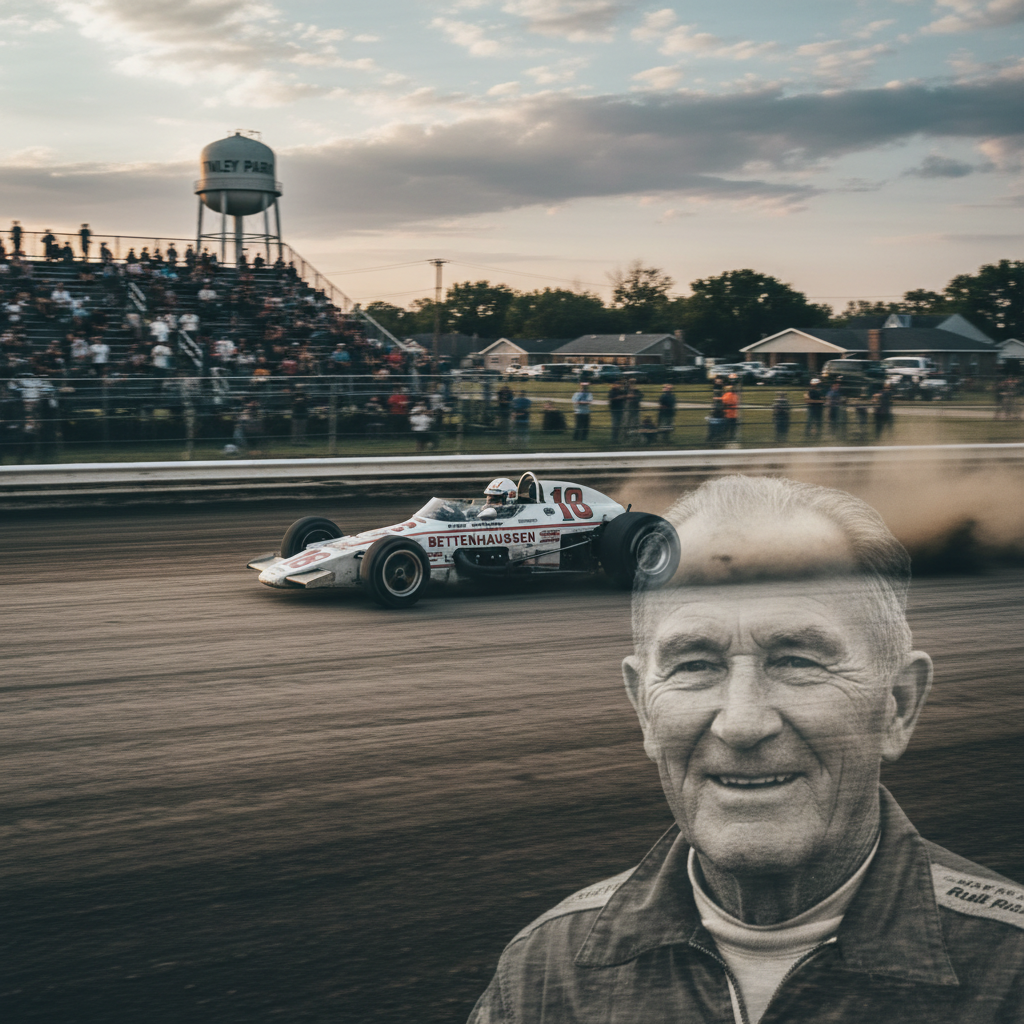
Merle Bettenhausen, a celebrated member of a famed Tinley Park racing dynasty who courageously returned to the track after losing an arm in a devastating crash, passed away on the morning of April 29, 2026. He was 82 years old. His death came 26 days after he suffered a massive stroke.
Bettenhausen’s life was a testament to his unbreakable spirit and deep-seated passion for motorsports, a love affair that was practically a birthright. Born in Tinley Park, Illinois, on June 9, 1943, he was immersed in the world of high-speed auto racing from his earliest days. His father, Tony Bettenhausen, was a giant in the sport, securing the 1951 AAA and 1958 USAC National Championships. The immense dangers of the sport cast a shadow over the family when Tony was killed during a practice run at the Indianapolis Motor Speedway in 1961, when Merle was just 17.
Despite the tragedy, the call of the racetrack was irresistible for Merle and his two brothers. His older brother, Gary Bettenhausen, became a decorated driver in his own right, earning four USAC national championships and making 21 starts at the prestigious Indianapolis 500. His younger brother, Tony Bettenhausen Jr., also competed in 11 Indianapolis 500 races before transitioning to team ownership within the Indy Car circuit. The Bettenhausen name became synonymous with American auto racing, a legacy Merle was determined to uphold. In a different facet of the racing world, the Los Angeles Sparks hire Stacy Johns as new president, demonstrating the evolving landscape of sports leadership.
A promising career begins
By the late 1960s, Merle was carving out his own path to stardom. He began making his name in the competitive USAC (United States Auto Club) ranks. In 1968, he captured his first career National Midget feature victory at Indianapolis Raceway Park, driving for car owner Ed Loniewski. This was the first of eight such wins he would accumulate over his career.
His success continued to build. He notched further victories in 1969 and 1970 for car owner Bob Lockard at tracks across the country, including Michigan’s Spartan Speedway and Arizona’s Manzanita Speedway. He also found victory lane for owner Howard Lehmann in Granite City, Illinois, in 1971 and again in 1972 at Indiana’s Whitewater Valley Speedway. In a testament to his family’s shared talent, he even drove his brother Gary’s car to a win at Manzanita in 1972.
His talent wasn't limited to Midget cars. In 1970, Bettenhausen made his first two starts in the Indy Car series, demonstrating remarkable skill by charging from 24th to 8th place at the Illinois State Fairgrounds Mile. He was named the 1971 Hoosier Hundred Rookie of the Year after a 10th-place finish at the Indiana State Fairgrounds, further solidifying his status as a rising star. His international success included winning the World Midget Championship in New Zealand in both 1970 and 1971.
A life-altering crash and a courageous return
Just seven weeks after his latest USAC National Midget victory, Merle’s career and life took a dramatic and terrifying turn. In July 1972, he received the call to compete in a 200-mile Indy Car race at Michigan International Speedway. Only four laps into the event, his car became entangled with that of driver Mike Hiss, sending Bettenhausen’s vehicle slamming into the outside wall.
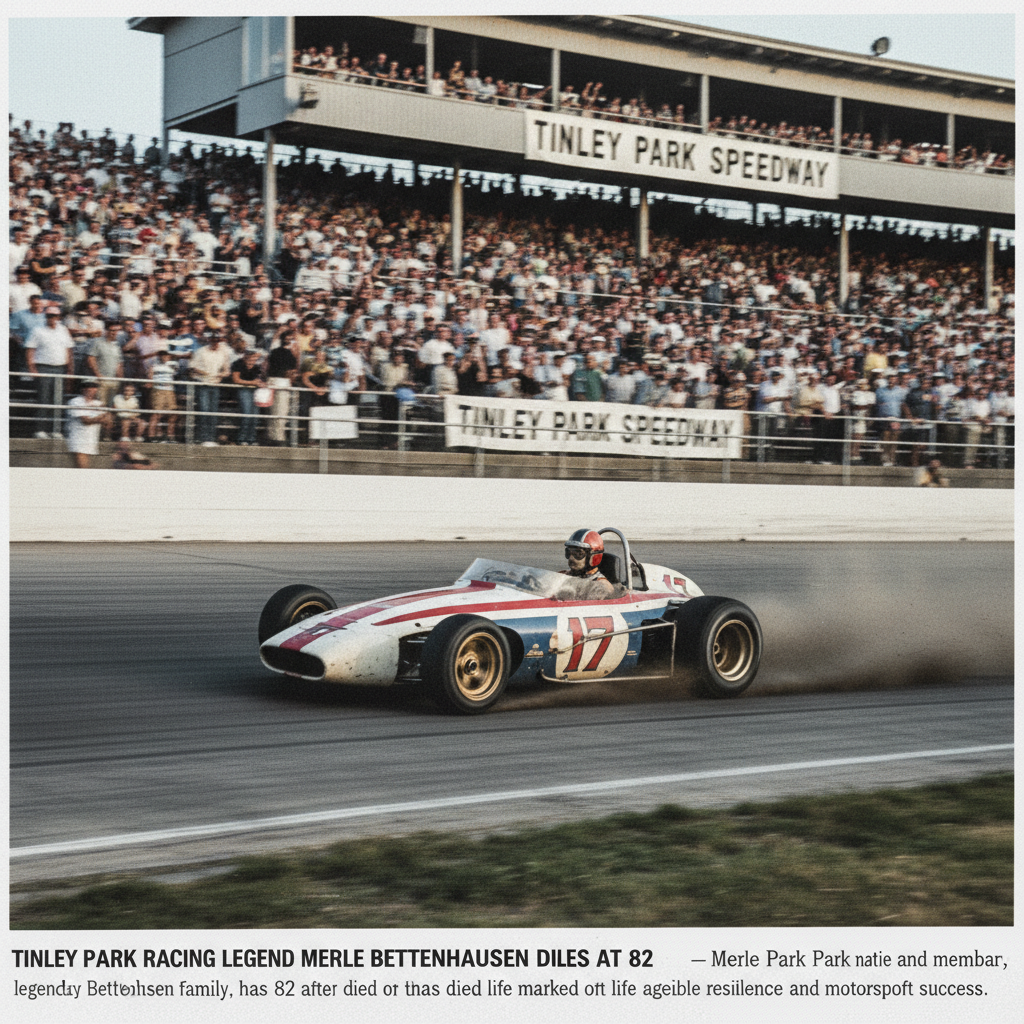
The consequences were catastrophic. The accident resulted in the traumatic amputation of his right arm above the elbow and left him with severe burns to his face. He was rushed to the University of Michigan Hospital in Ann Arbor, where he would spend the next two months undergoing treatment and beginning a long, arduous recovery. For most, it would have been a career-ending, if not life-ending, event. For Merle Bettenhausen, it was a challenge to be overcome.
Vowing to race again, he embarked on a remarkable journey back to the cockpit. Fitted with a prosthetic limb and a hook device to grip the steering wheel, he made his return to a USAC National Midget race in June 1973, just 11 months after the accident. In an incredible display of skill and determination, he qualified fourth and won his heat race, signaling to the racing world that he was far from finished. He was, officially, back.
Triumph over adversity
His comeback reached a miraculous peak on August 31, 1973, at Sportsman Speedway in Johnson City, Tennessee. In just his 14th race since returning from injury, Bettenhausen found himself locked in a fierce battle for the lead. On the final turn of the last lap, he swung his car to the outside of leader Billy Engelhart, winning the 40-lap feature by mere inches in a photo finish.
The victory was made even more astounding by the fact that his car’s power steering had failed early in the race. For the final 37 laps, he wrestled the Midget car around the track with sheer strength and will, an almost superhuman feat. It was a win that etched his name into motorsport folklore, a definitive statement of his resilience. He later stated that he considered himself a "much better and smarter racer" after the injury.
I've been considering quitting for several weeks and had more or less made up my mind on the way to Syracuse. I think this will be fairer to my wife and my seven-week-old daughter. I don't have any definite plans but I love auto racing and I hope to be involved in it for the rest of my life.
He continued to compete successfully throughout the 1974 season, at one point ranking second in the USAC National Midget points standings. However, the inherent dangers of the sport were never far from his mind. After his brother Gary suffered his own serious accident in July 1974, Merle announced his retirement from driving at the age of 31, citing a desire to prioritize his young family.
A lifelong ambassador for racing
True to his word, Bettenhausen remained deeply involved in the sport he loved. He spent several years selling tires and fuel at racetracks around the country and later worked for his brother Tony Jr.’s Indy Car team. His contributions to the motorsport community were formally recognized in 1974 when USAC honored him with the Jim Blunk Memorial Sportsmanship Award.
Beyond the track, he served his community in other ways. In 1974, Indiana Governor Otis R. Bowen appointed him to the Indiana Youth Council, reflecting the high regard in which he was held. Over his career, Merle made 203 career National Midget starts, 37 National Sprint Car starts, three Indy Car starts, and three Silver Crown starts, leaving an indelible mark on every series he touched. His legacy is not just one of statistics and wins, but of a profound human spirit that refused to be defeated.