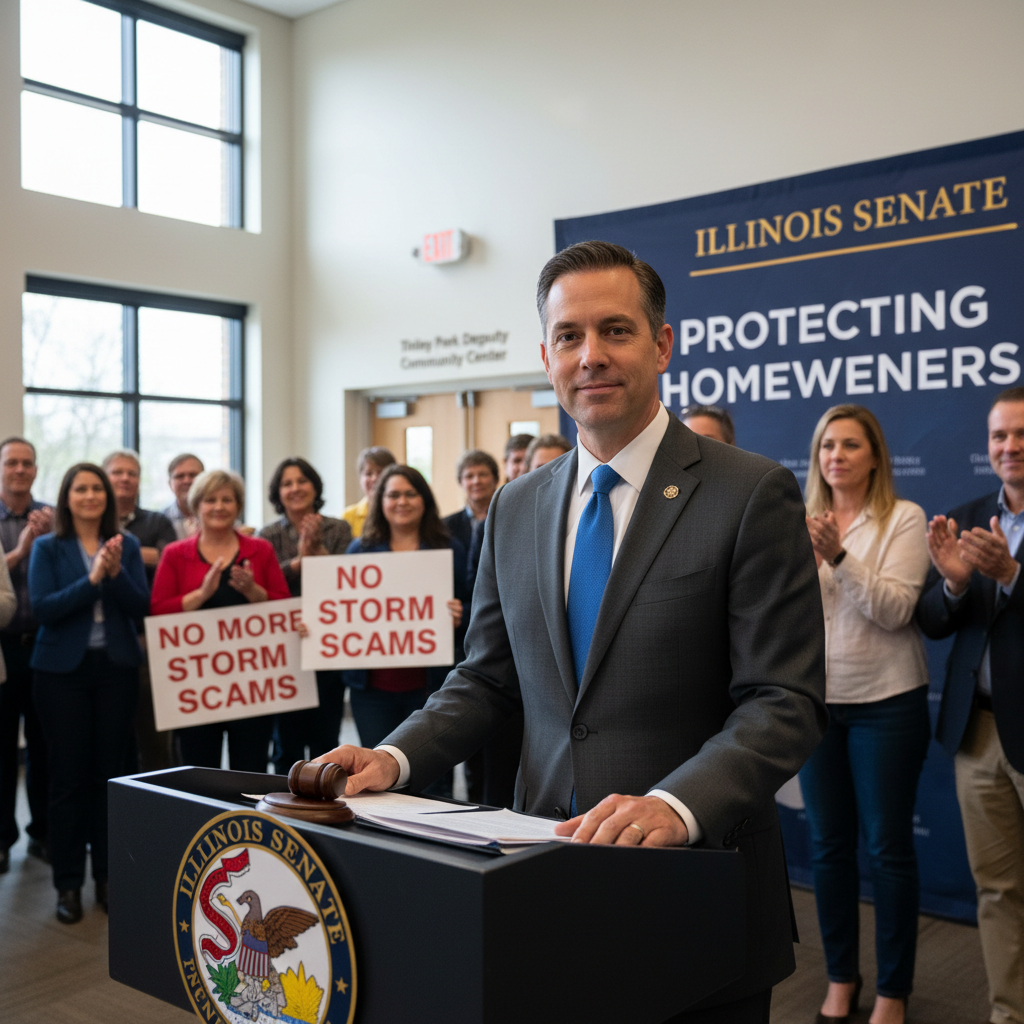
The Illinois Senate has passed new legislation aimed at protecting homeowners from high-pressure, deceptive contractors who often appear in neighborhoods immediately following severe weather events. State Senator Michael E. Hastings (D-Frankfort) spearheaded Senate Bill 3029 to regulate the conduct of these so-called “storm chasers.”
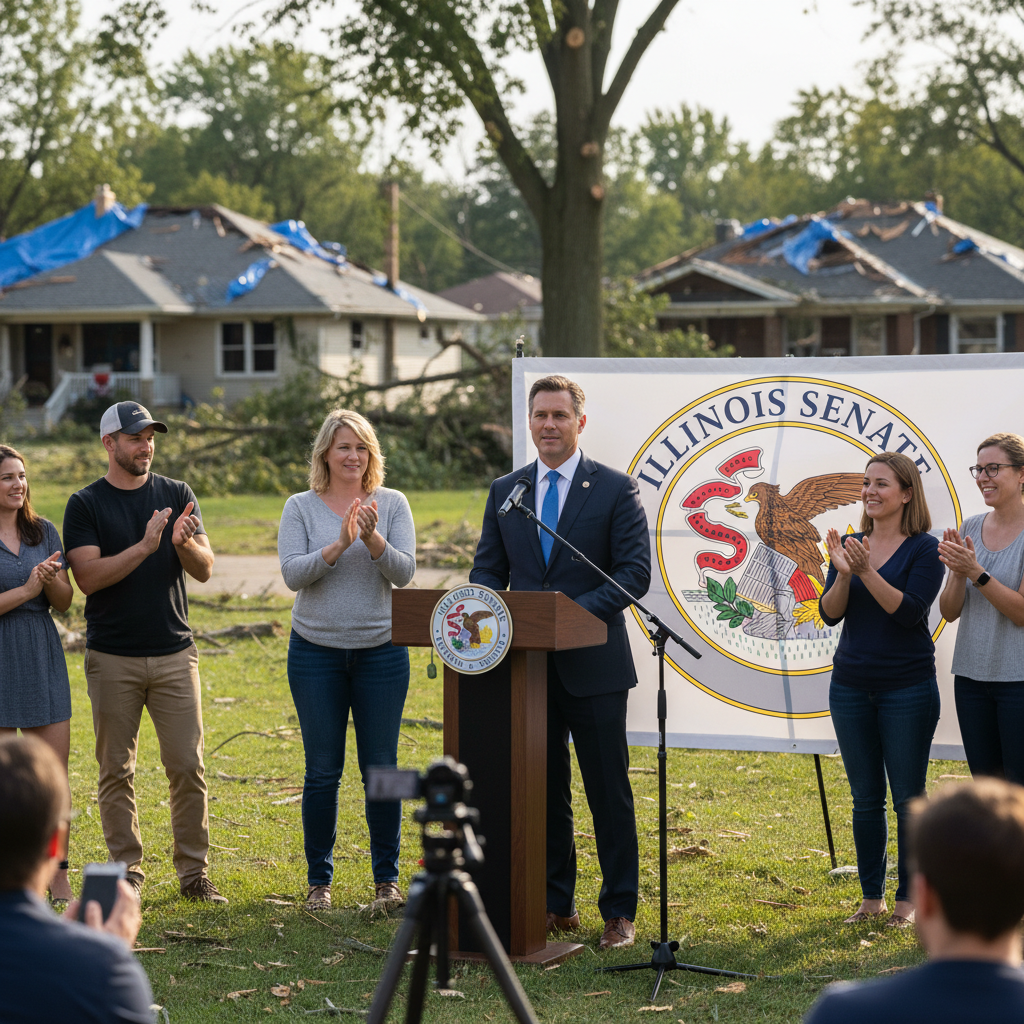
The bill comes in response to reports of aggressive solicitation in communities reeling from damage. A recent tornado in Kankakee County highlighted the issue, as contractors were reportedly on-site, pressuring distressed homeowners for on-the-spot repair deals less than a day after the disaster struck.
New restrictions on solicitation
Senate Bill 3029 introduces specific restrictions on when and how contractors can solicit business for home repair or remodeling. Under the proposed law, contractors would be prohibited from making offers while a damaging event like a fire or storm is actively happening or while emergency services are present at the property. It also establishes a curfew, banning unsolicited sales pitches between 7 p.m. and 8 a.m.
Crucially, the legislation does not prevent homeowners from seeking out contractors on their own initiative. The focus is squarely on preventing unsolicited, high-pressure tactics during a period of extreme vulnerability. Furthermore, if a disaster proclamation is issued for an area, the bill would impose a 72-hour moratorium on in-person solicitations unless first initiated by the consumer.
This legislation addresses a pattern of behavior where contractors exploit the chaos and stress that follow a natural disaster. Homeowners, often overwhelmed and displaced, can be more susceptible to signing unfair or fraudulent contracts for unnecessary or overpriced work. The bill seeks to create a necessary buffer, giving residents time to assess their situation without immediate pressure.
A widespread problem
The issue of predatory contractors is a significant concern for consumer protection advocates and insurance industry watchdogs. These operators often travel to disaster-stricken areas, using sophisticated tactics to secure business quickly. They may inflate invoices, use substandard materials, or perform shoddy work, sometimes leaving homeowners with bigger problems than they started with. Similar issues have surfaced around work zone accidents, where Maine drivers face a 'crash tax'.
The National Insurance Crime Bureau (NICB), a key supporter of the bill, warns that such practices are common after major storms. Adam Eathington, the NICB's Midwest Director of Strategy, Policy and Government Affairs, noted that these situations often lead to fraudulent activities.
Predatory contractors often use the aftermath of major storms or catastrophes to prey upon already vulnerable consumers. In many cases, that ends with inflated invoices or property owners being deceived into signing up for unnecessary repairs. NICB strongly supports the passage of SB 3029 and similar efforts that would help rein in predatory practices and strengthen protections against fraud by establishing necessary boundaries against fraud, soliciting and conflicts of interest.
Organizations like the Federal Emergency Management Agency (FEMA) regularly issue guidance to homeowners on how to avoid contractor fraud after a disaster, advising them to get multiple written estimates, check references, and never sign a contract under pressure.
Hastings' focus on Tinley Park development
Senator Hastings’ legislative efforts extend beyond consumer protection to significant community development projects in his district. A major priority has been the redevelopment of the long-abandoned Tinley Park Mental Health Center, a sprawling 280-acre property that has been vacant since its closure in 2012.
Last year, Hastings was instrumental in passing House Bill 3743, which authorized the transfer of the state-owned property to the Tinley Park - Park District. For over a decade, the site has been a source of concern for the village, with its buildings falling into disrepair. A 2019 environmental study revealed significant issues, including asbestos and black mold, rendering the campus a blight in the heart of the community.
The transfer paves the way for a major transformation, turning a derelict site into a valuable community asset. The Park District has a proven track record, making it a reliable choice for managing the ambitious project. There are many fun things to do in Tinley Park, and this new development promises to add even more recreational options for residents.
A new vision for a historic site
The Tinley Park - Park District plans to convert the former mental health center campus into a premier recreation destination. The vision includes a sports park with athletic fields, modern track and field facilities, and a domed sports complex suitable for year-round use. The project also incorporates open recreational space to serve the broader needs of the community and surrounding suburbs.
The redevelopment marks a new chapter for the property, which was the last of 12 state-run mental health facilities of its kind to close. The project is seen as a major win for the Southland region, promising to boost local amenities and property values. Similar large-scale public works projects, like Ottawa's recent public toilet installation, highlight a growing trend of cities investing in community infrastructure.
With Senate Bill 3029 now passed by the Senate, Senator Hastings continues to address both immediate and long-term issues facing his constituents, from protecting them against fraud to championing transformative local projects. The 'storm chaser' bill represents a step toward ensuring that in times of crisis, Illinois residents are shielded from those looking to exploit their misfortune.