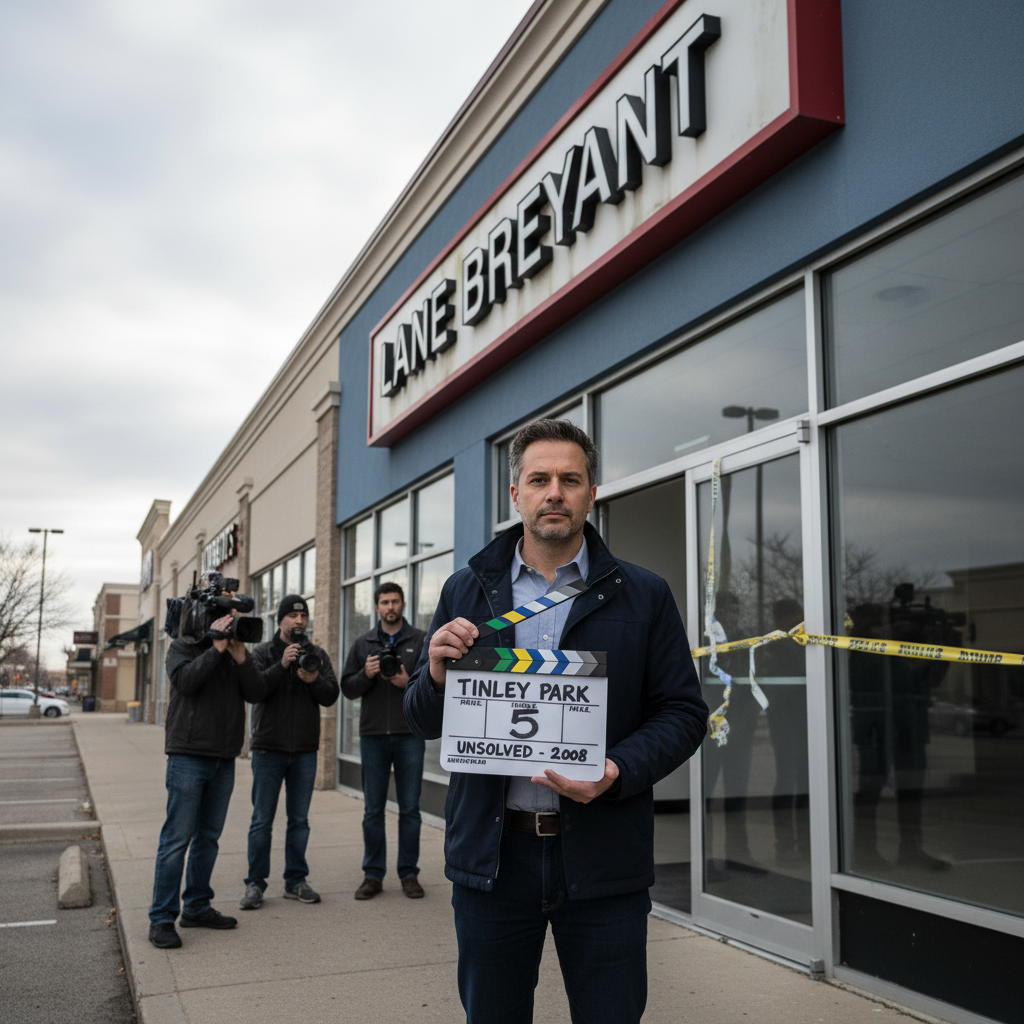
A new documentary is casting a fresh spotlight on one of the most infamous and tragic unsolved crimes in the south suburbs: the 2008 murders of five women inside a Tinley Park Lane Bryant store. Titled “A Nightmare in Tinley Park,” the film by veteran crime documentarian Charlie Minn delves into the cold case with the fervent hope of shaking loose new information that could finally lead to an arrest.
The film re-examines the brutal events of February 2, 2008, when a gunman entered the women’s clothing store in the Brookside Marketplace, forced six women into a back room, and shot them all, execution-style. Five of the women died. More than 16 years later, the killer has never been identified, and the case remains a painful open wound for the community and the victims' families.
Minn, who has produced numerous films about unsolved crimes under his "America's Most Wanted" series, says his primary motivation is to give the victims a voice and pursue justice on their behalf. He spent considerable time interviewing family members of the slain women, providing them a platform to share their memories and their enduring grief.
A crime that shook the south suburbs
The massacre at the Lane Bryant store, located near the busy intersection of 191st Street and Harlem Avenue, horrified the region and set off a massive, years-long investigation. The victims were a store employee, Carrie Hudek Chiuso, 33; two customers, Sarah T. Szafranski, 22, and Jennifer L. Bishop, 34; and the store’s manager, Rhoda McFarland, 42, of Joliet. A fifth victim, Connie R. Woolfolk, 37, also worked at the store.
These five women are voiceless. They're buried in the ground and they deserve justice, and that's what I'm seeking, is justice.
In a chilling display of composure, McFarland managed to discreetly call 911 during the robbery. The audio, later released by police, captured her hushed voice attempting to relay the situation before the gunman discovered the call. The dispatcher heard muffled sounds and then the line went dead. When police arrived minutes later, they found a scene of unimaginable horror.
A sixth woman, another store employee, was also shot in the neck but survived by playing dead. She became the key witness, providing investigators with the only detailed description of the killer. The witness described him as a Black man, between 6 feet and 6-foot-2 inches tall, with a husky build. He had "chubby" cheeks and three to five cornrows, with one braid distinguished by four light green beads on the end.
Based on her testimony, police released a composite sketch that has been circulated thousands of times over the years. Despite the detailed description and the extensive media coverage, the man in the sketch has remained a ghost.

The lingering investigation
In the weeks and months following the shooting, the Tinley Park Police Department, along with state and federal agencies, pursued thousands of leads. A reward for information leading to an arrest quickly grew to over $100,000. Yet, every tip led to a dead end. The weapon was never found, and forensic evidence from the scene has not yet produced a definitive match.
Over the years, the investigation has continued, but with less public visibility. For the families of the victims, the lack of answers has meant a prolonged state of uncertainty and pain. The case remains one of the most prominent cold cases in Illinois history, a stark reminder of a day that forever changed the sense of security in the otherwise quiet suburb. The case bears a somber resemblance to other violent, unsolved crimes in the greater Chicagoland area that have left communities searching for answers. Similar incidences include the Sydney home invasions where children inside were hit by 23 bullets in 15 minutes, and the recent case of an Oak Lawn woman found dead in her home. These incidents underscore the devastating long-term impact on families and the immense challenge faced by law enforcement in solving them.
'Needle in a haystack'
Filmmaker Charlie Minn acknowledges the immense difficulty of cracking a case that has been cold for so long. "My goal is to try to find this guy, and obviously, this is a needle in a haystack," Minn said. He believes, however, that the key to solving the mystery lies with someone who knows the killer and has kept their secret for over a decade.
Minn’s documentary aims to appeal directly to that person’s conscience. He argues that after more than 16 years, relationships change, and someone who was once afraid to come forward might now feel compelled to do so. He stresses that providing a tip would be a heroic act, not an act of snitching.
Documentaries and podcasts have been instrumental in reigniting interest in other cold cases, sometimes leading to breakthroughs. By presenting the human toll of the crime through the eyes of the families, Minn hopes his film will resonate with the public and convince someone to finally break their silence.
The Tinley Park Police Department continues to actively seek information on the case. Investigators urge anyone with information, no matter how insignificant it may seem, to contact the department’s tip line. "This person is a hero if he or she comes forward," Minn says of a potential witness.
For now, the families of the five women wait, as they have for more than a decade, for the phone call that will tell them justice is finally at hand. The documentary serves as a powerful new beacon of hope that the killer will one day be held accountable.
Anyone with information is urged to call the Tinley Park Police Department’s dedicated tip line at (708) 444-5394 or email tinleyparkpd-hotline@tinleypark.org.