Overview & Character
Tinley Park, Illinois, is a large and dynamic suburb that perfectly marries a welcoming, family-friendly atmosphere with robust economic vitality.
Nestled in the heart of the Chicago metropolitan area's southwest suburbs, Tinley Park has earned a reputation as one of the best places to live in the region.
Its motto, "Life Amplified," reflects a community that offers an abundance of amenities, from award-winning parks and excellent schools to a thriving business sector.
The vibe is distinctly suburban and community-focused, attracting a diverse mix of families, professionals, and long-term residents who appreciate its safe, walkable neighbourhoods and strong sense of local pride.
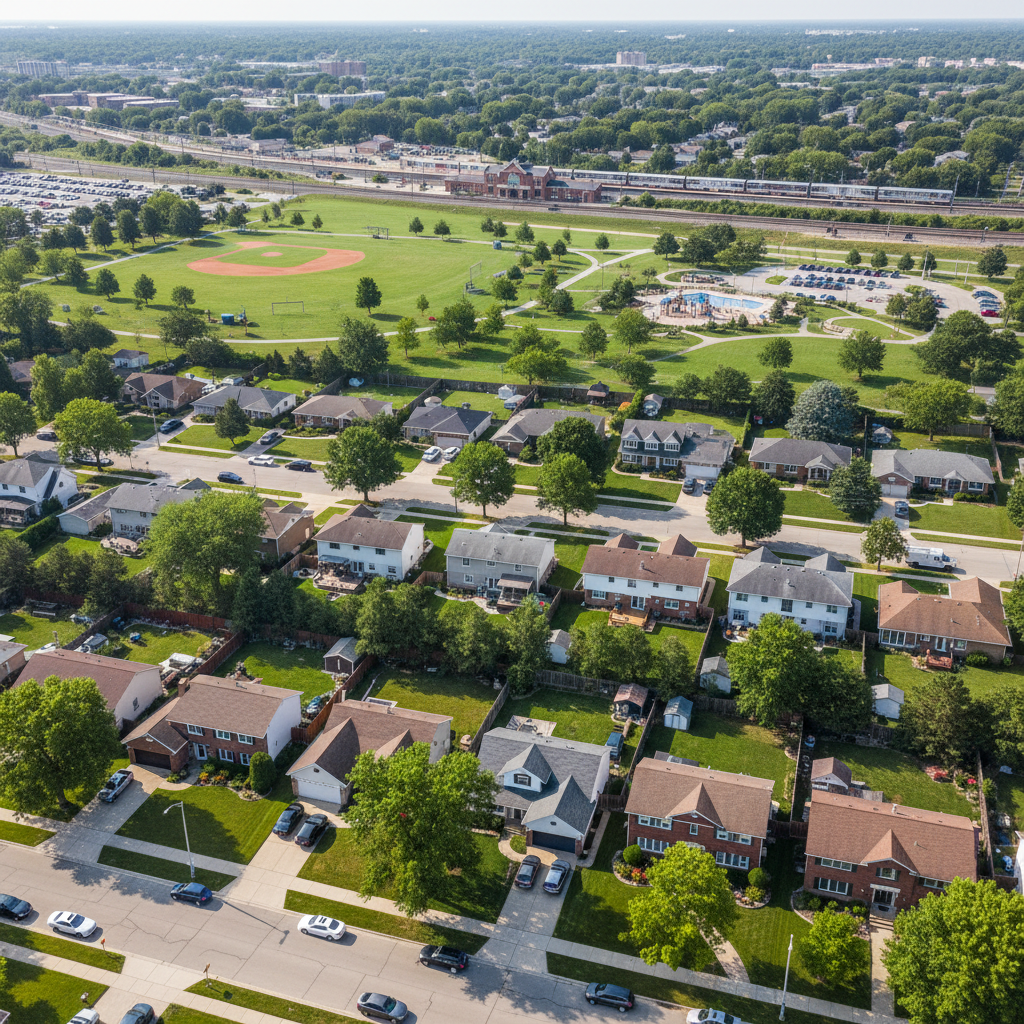
The character of Tinley Park is defined by its clean, well-maintained residential areas, featuring a variety of housing styles from classic mid-century homes to modern constructions.
A strong emphasis on community life is evident in its meticulously cared-for public spaces and a calendar full of local events. It’s a place where neighbours know each other, and community engagement is high.
While it offers all the conveniences of a large suburb, it retains a sense of small-town charm, making it a highly desirable location for those seeking a balanced and high-quality lifestyle with easy access to the urban resources of Chicago.
Location & Geography
Strategically located in the fast-growing Interstate 80 corridor, Tinley Park sits approximately 21 miles southwest of the Chicago Loop. Its location provides an ideal balance of suburban tranquillity and metropolitan accessibility.
The village spans two counties, with the majority in Cook County and a southern portion in Will County. Covering an area of approximately 16.2 square miles (42 square kilometres), the suburb is well-connected to the entire Chicagoland area and beyond.
Tinley Park's boundaries are situated near other prominent suburbs such as Orland Park to the north, Mokena to the west, and Oak Forest to the east. The topography is characteristic of the region, featuring generally flat terrain.
Its prime location is enhanced by its proximity to major transportation hubs, being just 13 miles from Chicago Midway International Airport and 27 miles from O’Hare International Airport, making both domestic and international travel highly convenient for residents and businesses.
Demographics & Population
According to the 2020-2024 American Community Survey estimates, Tinley Park has a population of 54,842 residents living in 22,320 households.
The suburb has a stable and mature community, reflected in its median age of 43.2 years, which is notably higher than the Chicago metropolitan area average. This demographic profile suggests a community of established families and long-term residents.
The average household size is 2.5 people, consistent with the regional average.
The ethnic and racial makeup of Tinley Park is predominantly White (Non-Hispanic) at 76.2% of the population. Other significant groups include Hispanic or Latino (of any race) at 10.9%, Black (Non-Hispanic) at 6.6%, and Asian (Non-Hispanic) at 3.6%.
The community is largely composed of married-couple families, which make up 68% of all households. This data paints a picture of a traditional, family-oriented suburban community with growing diversity.
Property Market
The property market in Tinley Park is known for its stability, diverse housing options, and long-term investment potential.
While specific median house prices are not available in the provided source material, the suburb offers a wide range of properties to suit various budgets and lifestyles.
Housing stock includes affordable townhomes, established single-family residences in leafy subdivisions like Fairmont Village, and newer custom homes in communities such as Brookside Glen.
The area also features modern, transit-oriented developments like The Boulevard at Central Station, offering condos with mixed-use amenities.
The high median household income of $105,189, which is significantly above the regional average, indicates a strong and affluent resident base capable of supporting robust property values.
Investors and homebuyers are attracted to Tinley Park for its stable growth and the strong zoning regulations that protect property values.
The combination of excellent schools, low poverty rates, and high quality of life makes it a prime location for real estate investment in the Chicago suburbs.
Education
Tinley Park is served by multiple highly-regarded public school districts, making it a top choice for families. While a comprehensive list of all schools is not provided, the area is known for its commitment to quality education.
Notable districts serving the community include Kirby School District 140, which is frequently praised by residents for its academic programs and dedicated staff.
The village's educational landscape is designed to support students from early childhood through to high school. The presence of numerous parks and community facilities further enhances the learning and developmental environment for children.
For higher education, the suburb's strategic location provides convenient access to the numerous colleges and universities throughout the greater Chicago metropolitan area, accessible via road and public transport.
Transport & Getting Around
Tinley Park is one of the best-connected suburbs in the Chicagoland area. Its transportation infrastructure is a major draw for commuters and businesses.
The village offers direct Metra rail access to downtown Chicago via the Rock Island Line, with daily services from the Tinley Park station on Oak Park Avenue and the 80th Avenue station.
The mean travel time to work for residents is approximately 33.7 minutes.
The suburb is ideally situated at the junction of major highways, including Interstate 80, which provides east-west access across the country, and is near Interstate 57 and Interstate 355 for north-south travel.
La Grange Road (US-45) is a major arterial road running through the village. While the majority of residents (76%) drive alone to work, public transit is a viable option for 4% of commuters.
The walkability is good within specific neighbourhoods, though a car is generally necessary for broader errands.
Parks, Recreation & Lifestyle
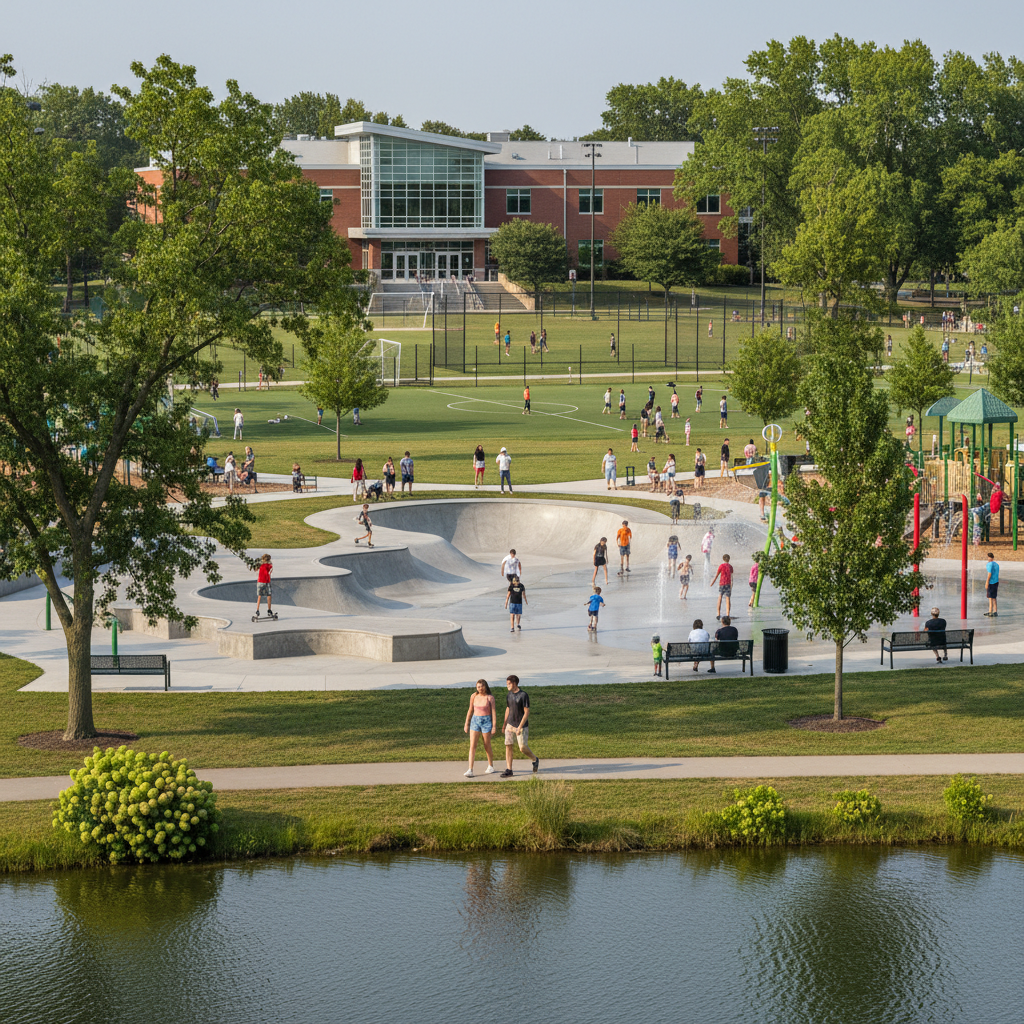
The lifestyle in Tinley Park is active, family-centric, and community-oriented, supported by an award-winning park district. The village boasts a large number of parks, playgrounds, and recreational facilities that are central to community life.
These green spaces provide residents with ample opportunities for sports, leisure, and relaxation. The emphasis on outdoor recreation contributes significantly to the high quality of life enjoyed by residents.
Beyond its parks, the lifestyle is characterized by a strong sense of community. Neighbours connect at local sports games, community events, and in the well-maintained public spaces.
The village’s layout, with its mix of residential streets and accessible commercial areas, fosters a safe and comfortable environment.
It is a community where residents can enjoy a relaxed suburban pace while still having access to a wide array of amenities and entertainment options.
Shopping & Dining
Tinley Park features a vibrant and diverse retail and dining scene spread across several thriving business districts.
The main commercial corridor is along Oak Park Avenue, particularly in the historic downtown area, which offers a charming mix of local boutiques, restaurants, and professional services.
The village also hosts larger shopping centers with national retailers and supermarkets, ensuring residents have convenient access to all their daily needs.
The dining scene caters to a wide variety of tastes, from casual family-friendly eateries to more upscale dining options.
The development of mixed-use areas has further enhanced the retail landscape, creating walkable hubs where residents can shop, dine, and socialize.
The overall character is a healthy mix of local small businesses and well-known national brands, reflecting the suburb's dynamic economy.
History & Heritage
While specific historical records are not detailed in the provided sources, Tinley Park, like many Chicago suburbs, has a rich history tied to the expansion of the railways in the 19th century.
Originally settled by German immigrants, the village was known as "Bremen" before being incorporated as Tinley Park in 1892. Its growth over the decades can be traced through its architecture and the expansion of its residential subdivisions.
The historic downtown area around the Oak Park Avenue Metra station retains some of this early charm. The village’s commitment to preserving its history while embracing modern development is a key aspect of its identity.
The population growth statistics, showing a significant 17.2% increase between 2000 and 2010, highlight its transformation into the major suburban hub it is today.
Community & Events
Community spirit is the cornerstone of life in Tinley Park. The village fosters a connected and engaged atmosphere through a variety of annual events, festivals, and local gatherings.
These events bring residents together and create a strong sense of belonging and civic pride. The "Benches on the Avenue" public art display is a popular summer attraction, showcasing the creativity of local artists and beautifying the downtown area.
Popular annual events that draw crowds from across the region include the Caribbean Block Party, a vibrant summer celebration of music and culture, and the Downtown Tinley Block Party.
While specific community groups are not listed, the high level of participation in these public events suggests an active and involved citizenry.
Places of worship representing various denominations also serve as important community hubs for many residents.
Safety & Services
Tinley Park is widely regarded as a safe community, a reputation supported by data indicating a low poverty rate of just 5%, less than half the average for the Chicago metropolitan area.
The village is known for its safe, walkable neighbourhoods, making it an attractive place for families to raise children. This sense of security is a key factor in its high liveability rankings and strong property values.
The village is served by its own police and fire departments, providing responsive and reliable emergency services to residents.
Proximity to excellent healthcare facilities is another advantage, with several major hospitals located within a short drive of the suburb. This comprehensive network of public safety and health services ensures that residents are well-cared for.
Development & Future
Tinley Park is positioned for continued growth and prosperity.
Its location in the Interstate 80 Corridor has been identified as one of the fastest-growing business locations in the Chicago metro area, with significant potential for commercial, office, and technology sector expansion.
The village government maintains a pro-business climate with attractive incentives to encourage investment and development.
A key example of forward-looking development is "The Boulevard at Central Station," a transit-oriented development that combines residential condos with mixed-use amenities near the 80th Avenue Metra station.
This project exemplifies the village's strategy of smart growth, focusing on enhancing connectivity and creating vibrant, walkable community hubs.
Future development is expected to continue along these lines, balancing economic growth with the preservation of the suburb's high-quality residential character.
Living in Tinley Park: Pros & Cons
For those considering a move to Tinley Park, it's helpful to weigh the advantages and potential drawbacks. Here is a balanced look at what it's like to live in this prominent Chicago suburb:
- Pro: Excellent Transportation Links - With two Metra stations and immediate access to major interstates like I-80, commuting to Chicago and traveling throughout the region is highly convenient.
- Pro: Family-Friendly Environment - The suburb is known for its highly-rated schools, numerous award-winning parks, and safe neighbourhoods, making it an ideal place to raise a family.
- Pro: Strong & Stable Economy - A diverse business climate and a strategic location in a major growth corridor provide economic stability and employment opportunities.
- Pro: High Quality of Life - A rich community life, ample recreational facilities, and a low poverty rate all contribute to an excellent standard of living.
- Con: Higher Commute Times - While transport links are excellent, the average commute time of 33.7 minutes is longer than the state and national averages, reflecting its suburban location.
- Con: Car-Dependent - Like many American suburbs, owning a car is generally necessary for most errands and activities outside of the transit-oriented downtown area.
- Con: Mature Demographics - With a median age of 43.2, the suburb may feel less vibrant for younger singles or recent graduates seeking a fast-paced, urban social scene.